
Bikes up to 60% offWe monitor over 40,000 bikes daily to find the best prices
Today’s Deals
| Frame | Aluminum |
|---|---|
| Fork | Manitou Circus Expert |
| Wheels | 26 Aluminum |
| Brakes | Tektro Hydraulic Disc |
Highs Lightweight XL frame will fit taller riders well; Good value
Lows Poor brake modulation; Headset was prone to loosening
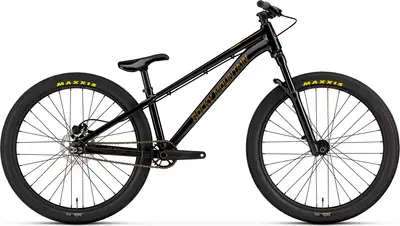
The Rocky Mountain Flow is back, but instead of being reincarnated as a freeride hardtail, Rocky is branding the new bike as one designed to excel on the pump track. According to our contact at Rocky Mountain the “pump track” designation was both a marketing decision based on the influx of pumptracks and their popularity worldwide, as well as a nod to the bike’s light weight; my size XL came in at just 25.6 lbs or 11.6 kgs without pedals. That said, Rocky Mountain still claims that the alloy frame well exceeds industry strength testing, and I can personally attest that the bike was unphased by one of the bigger nose cases I’ve taken in a while!
In terms of geometry, the bike definitely leans more towards the fast and stable side of the spectrum. The 455 mm reach is the longest I’ve ever seen on a dirt jumper, and the 316 mm bb height is about as low as they come as well. The 465 mm stack felt a bit low in comparison to the frame's long reach, which again speaks to the bike’s racier intentions. Collectively, these help the bike to feel poised at high speeds, albeit at the cost of being a bit less agile and poppy than bikes designed for riding dirt jumps and skateparks.


In addition to the 26” XL bike I’ve been riding, Rocky Mountain also makes a 26”, S/M and two junior bikes, one rolling on 24” wheels and the other on 20s. The two adult frames both come with adjustable chainstays with integrated tensioners that can be run anywhere from 380 to 410 mms to further dial in the bike’s feel. Lastly, the Flow comes with a 68.5 degree headtube angle, which is right in line with most modern dirt jumpers.
Part Spec
The Rocky Mountain Flow lists for $1,259, which is on the low end when compared to other popular dirt jumpers, but it still gets a pretty solid set of components. At the front of the bike is a 100 mm Manitou Circus Expert fork, which features an air spring with rebound and compression adjustment. The 7 clicks of compression provided a wide range of adjustment, and I left it open at the dirt jumps, a couple clicks at the pump track, and fully locked it out while at the skatepark.
Like many dirt jumpers, the Flow comes with just a rear brake, more specifically a Tektro HD-M275. I’ve ridden this brake on quite a few budget trail bikes and had no issue, but for some reason I never quite got along with it on this bike.


A big part spec highlight for me were the 2.3” Maxxis DTH tires, which are legendary in the BMX and dirt jump world. They were fast rolling and surprisingly grippy, even on the wet, freshly shoveled concrete at the skatepark. The rest of the spec is covered largely by Rocky Mountain, with alloy wheels, a pivotal seat, 40 mm stem, and 780 mm wide bars.

Pump Track
The first testing location was at the Flow’s home turf, the pump track. I seldom visit the pump track these days, but despite my own ignorance the Flow handled itself just fine. I was impressed by just how much grip I was able to get out of the tires, and the geometry never felt too long while carving tight berms or manualling through rollers. The bike’s 30-14 gearing combined with the lightweight alloy frame was perfect for quickly gaining momentum at the start of the lap, while still being plenty stiff enough around the track, even at my portly 200 lbs. All in all, the bike left nothing to be desired at the pump track, and I think it would fare equally well racing BMX, something I sadly didn’t get a chance to do while I had the bike.

Dirt Jumps
Next it was time to head to some terrain that’s a bit more familiar to me, the dirt jumps. I managed to fit in just one session at my local spot before the snow began to fall, and I was, for the most part, impressed with how the Flow did there. Once again, the geometry felt comfortable and confidence inspiring while hitting high speed doubles, though I would likely choose to swap out the 38 mm rise bars for something with a bit more height if this were my own bike.The Flow even helped me unlock a jump line I had yet to ride on either my BMX or trail bike, which I think speaks to the perfect balance dirt jumpers strike between these two disciplines.
It was while working on this new line that I experienced what might be one of the bike’s only downsides, the poor braking performance. The Tektro HD-M275s had virtually zero modulation; there was either no power or I was skidding down the landing. That said, I’ve ridden these brakes before without experiencing the same lack of modulation and control, so hopefully this is just a one off issue.
Another slightly disconcerting trait I found at the dirt jumps was the headset’s tendency to loosen while riding, requiring me to re-torque the top cap every half hour or so. As I’ve mentioned, I am on the heavier side and was hitting some decent sized jumps, but nothing that I would consider to be out of the ordinary for a bike like the Flow. I’m again hoping that this is an isolated case, and I’m thankful to say that I never had the same problem at the pump track or skatepark.
Skate Park
My final testing location was at the skatepark, and sadly the winter conditions made my options a bit limited, especially in regards to riding bigger bowls. That said, I still had a blast playing around on the smaller plaza features I had cleared of snow. I assumed that the bike's generous wheelbase would prove detrimental with smaller, jibby tricks, but that wasn’t the case. I was also appreciative of the Manitou Circus’ wide range of compression adjustment and chose to add all seven clicks of dampening, effectively locking out the fork. In total, I was very impressed with how the Flow handled the skatepark, ultimately proving itself to be much more than a strictly dedicated pump track bike.


How Does it Compare
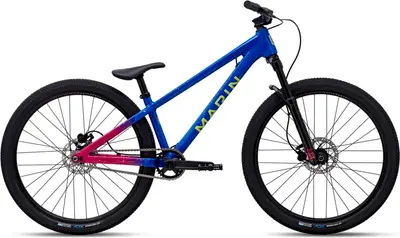
The dirt jump market is as strong as ever, and the Rocky Mountain flow has quite a bit of competition near its price point. One such bike is the Marin Alcatraz, which at $1,399 is $140 more than the Rocky Mountain. Both bikes feature the same 100 mm Manitou Circus Expert fork and are pretty comparable across the rest of their spec as well. Where they differ, though, is in geometry. The size large Alactraz has a shorter reach and higher stack than the Flow, giving it a more upright position, better for leveraging the bike into bunny hops and manuales as well as doing tricks. The Marin also has a steeper headtube angle and reduced bottom bracket drop, once again bolstering the bike’s maneuverability, but at the cost of added stability at higher speeds. With that in mind, the Alcatraz is probably a better option for riders looking to push their skills at the dirt jumps or skatepark, whereas the Flow, just like Rocky Mountain claims, will be a better option for riders focused on speed at the pump or BMX race track.
MSRP | $1,259 | $1,399 |
|---|---|---|
Spec Level | ||
Fork | Manitou Circus Expert | Manitou Circus Expert |
Groupset | SRAM | |
Drivetrain | Single-speed | Single-speed |
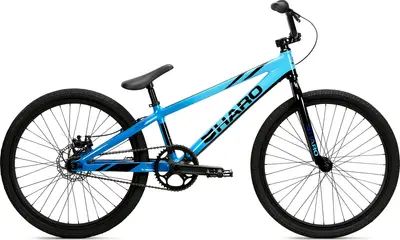
The next comparison may seem a bit odd, but that’s to compare the Flow to the Haro Pro 24 BMX bike, which lists for just $679. BMX race bikes like this Haro are not only less expensive, but are a;sp the undisputed champs in pump track and BMX racing, so if you’re planning to spend the majority of your time there anyway, why not get a purpose built tool? That said, if you want to venture beyond the pumptrack and take the bike to the dirt jumps or even a dual slalom course, then I think the larger wheels and suspension fork are certainly worth having. The larger frame dimensions of the Flow over a 24” BMX bike will also appeal to riders who struggle with back pain, or simply want a bike that feels more akin to their mountain bike.
MSRP | $1,259 | $679 |
|---|---|---|
Spec Level | ||
Fork | Manitou Circus Expert | Steel |
Wheel Size | 26″ | 24″ |
Brakes | Tektro Hydraulic Disc | Promax Mechanical Disc |
Groupset | SRAM | |
Drivetrain | Single-speed | Single-speed |
Suspension | Hardtail | Rigid |
The Goat’s Take
In total, the Rocky Mountain Flow’s generous frame proportions and relatively low price make it a perfect choice for an adult mountain biker looking to hone their skills during the off season or simply ride along with their kids while at the pump track or dirt jumps. With the exception of a few not-picky issues at the dirt jumps, the Flow handled itself exceedingly well in a variety of terrain.


